


A Tiny Trail Rustles, Hiding An Ancient Evolutionary Secret.
The African Elephant Shrew: A Tiny Giant of the Savannah
We often look to the horizon for Africa's most breathtaking wildlife, the towering giraffe or the thunderous rhino. But true wild-hearted curiosity requires us to look down, deep into the leaf litter and scrub. Here, navigating a meticulously cleared network of miniature trails, lives one of the continent's most fascinating and ecologically vital creatures: the African elephant shrew.
At Africa Wild Child, we believe every creature, no matter how small, plays a monumental role in the wild spaces we fiercely protect. To understand the elephant shrew is to understand the rugged, intricate balance of the African ecosystem.
Shop the story
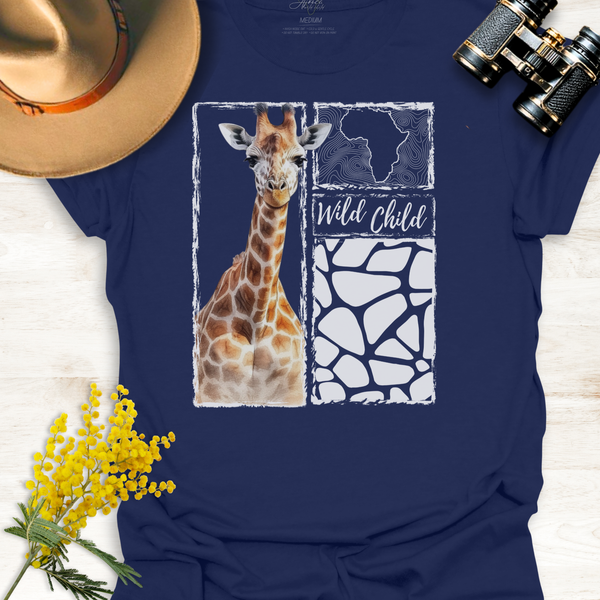
Inspired by this post — gear and wear we use in the wild.


A Misleading Moniker: What is a Sengi?
When early naturalists first encountered this animal, they hastily labeled it the "elephant shrew", a superficial classification based entirely on its small stature and long, flexible snout. However, rigorous modern research and critical examination of mammalian taxonomy have dismantled this early assumption.
They are not true shrews at all. To honor their unique biological identity and move beyond colonial-era misclassifications, many contemporary conservationists and researchers now prefer the African indigenous name, sengi. While we fully support that shift, we'll stick with elephant shrew throughout this article for the sake of familiarity.
 Black and white photo of a small elephant shrew on a rock - Photo by zorotoo's Images on Canva
The Afrotheria Connection
The elephant shrew's story shifts from curious to astonishing when we examine its DNA. Molecular sequencing reveals that elephant shrews belong to an ancient, endemic African super-cohort of mammals known as Afrotheria.
This means this pocket-sized, ground-dwelling insectivore does not share a lineage with the mice or true shrews it superficially resembles. Instead, it shares a common evolutionary ancestor with the aquatic manatee, the aardvark, and, incredibly, the towering African elephant. The elephant shrew is a living testament to Africa's deep evolutionary history.
Habitat and the Architects of the Underbrush
Elephant shrews are remarkably adaptable, making their homes across diverse terrains, from the sun-scorched fringes of the Namib Desert to the dense coastal forests of East Africa.
The Runway Engineers: Rather than retreating into deep underground burrows, many elephant shrew species are meticulous trail builders. They spend their days clearing twigs and leaves to create complex, high-speed escape routes through the undergrowth.
Daylight Foragers: Unlike many small mammals, elephant shrews are largely diurnal. They use their specialized snouts to probe the earth and flip leaf litter in search of ants, termites, and beetles.
Fiercely Territorial: Living in monogamous pairs, these small creatures are intensely protective of their home ranges, relying on scent markings and their cleared pathways to monitor their borders.
 Elephant shrew peeking through roots in sandy habitat - Photo by Danil Rudenko from danr13 on Canva
The Ecological Significance of the Elephant Shrew
As voracious insectivores, elephant shrews act as nature's pest controllers. By constantly turning over leaf litter and soil in search of invertebrates, they actively aerate the earth and accelerate the decomposition of organic matter. Without the elephant shrew, the delicate equilibrium of insect populations and soil health in both savannas and forests would falter.
Conservation Relevance: The Fight for the Forest
While some elephant shrew species remain stable, forest-dwelling specialists such as the endangered Golden-rumped elephant shrew face severe pressure. The primary threat is not natural predation, but habitat fragmentation.
Recent studies from the Arabuko Sokoke Forest Reserve in Kenya show that empowering people is the most effective way to protect wildlife. Through Participatory Forest Management (PFM), local communities are given sustainable alternative livelihoods in exchange for protecting the woodland. Where PFM is implemented, illegal logging plummets and specialized species like the elephant shrew begin to recover.
 Black and rufous elephant shrew (Rhynchocyon petersi), found only in Africa. Photo by phototrip from Getty Images on Canva
How You Can Help Protect the Elephant Shrew
Support Community-Led Conservation: Direct your backing toward organizations like the African Wildlife Foundation or Nature Kenya, which focus on empowering local communities alongside habitat protection.
Champion Ethical Trade: Choose sustainably sourced wood, coffee, and agricultural products to help protect the fragmented forests elephant shrews call home.
Amplify the Message: Awareness is the catalyst for preservation. Speak up for the lesser-known, overlooked species that keep our ecosystems breathing.
A Lasting Legacy
The elephant shrew may be small, but its survival highlights the rugged endurance of the African wild. From their ancestral ties to giants to the meticulous trails they carve through the brush, they remind us that every life holds immense ecological weight.
Want to go deeper? Discover 10 surprising facts about Africa's evolutionary marvel or explore all of Africa's Small Five.
Protect Africa's Wildlife Today
👉 Explore our collection of wildlife and adventure graphic tees designed to last: Shop Africa Wild Child
Sources:
African Wildlife Foundation (AWF): Elephant Shrew species profile, behavior, and habitat fragmentation data.
Journal of Mammalogy / Oxford Academic: Morphological and molecular evidence placing Macroscelidea within the Afrotheria clade.
Mongabay (2023): Research on the Arabuko Sokoke Forest Reserve, sengi population recovery, and the effectiveness of Participatory Forest Management (PFM).
All images are the property of the copyright holders. Accreditation links provided for easy reference.


